

Every impressive sales resume is really a measurement of the company that stood behind it. The warm leads, the budgets, the famous logo that opened doors before a word was spoken – take those inputs away, and the star closer you fought to win often has nothing left to sell.
Only 31% of reps exceeded quota across 4.2 million opportunities, and even the rare exceptions break on startup ambiguity – I once placed a 12-year Microsoft top performer who went right back to Microsoft.
The salesperson who would actually change your company is ahead of quota somewhere else right now, deleting your message unread. The ones worth hiring are precisely the ones who will never apply.
Why Are Inbound Job Postings Ineffective for SaaS Sales Recruitment?
Job descriptions suck. If they worked, I'd be out of a job. Posting a role and waiting is hoping the right person happens to walk past your restaurant instead of going out and bringing them in.
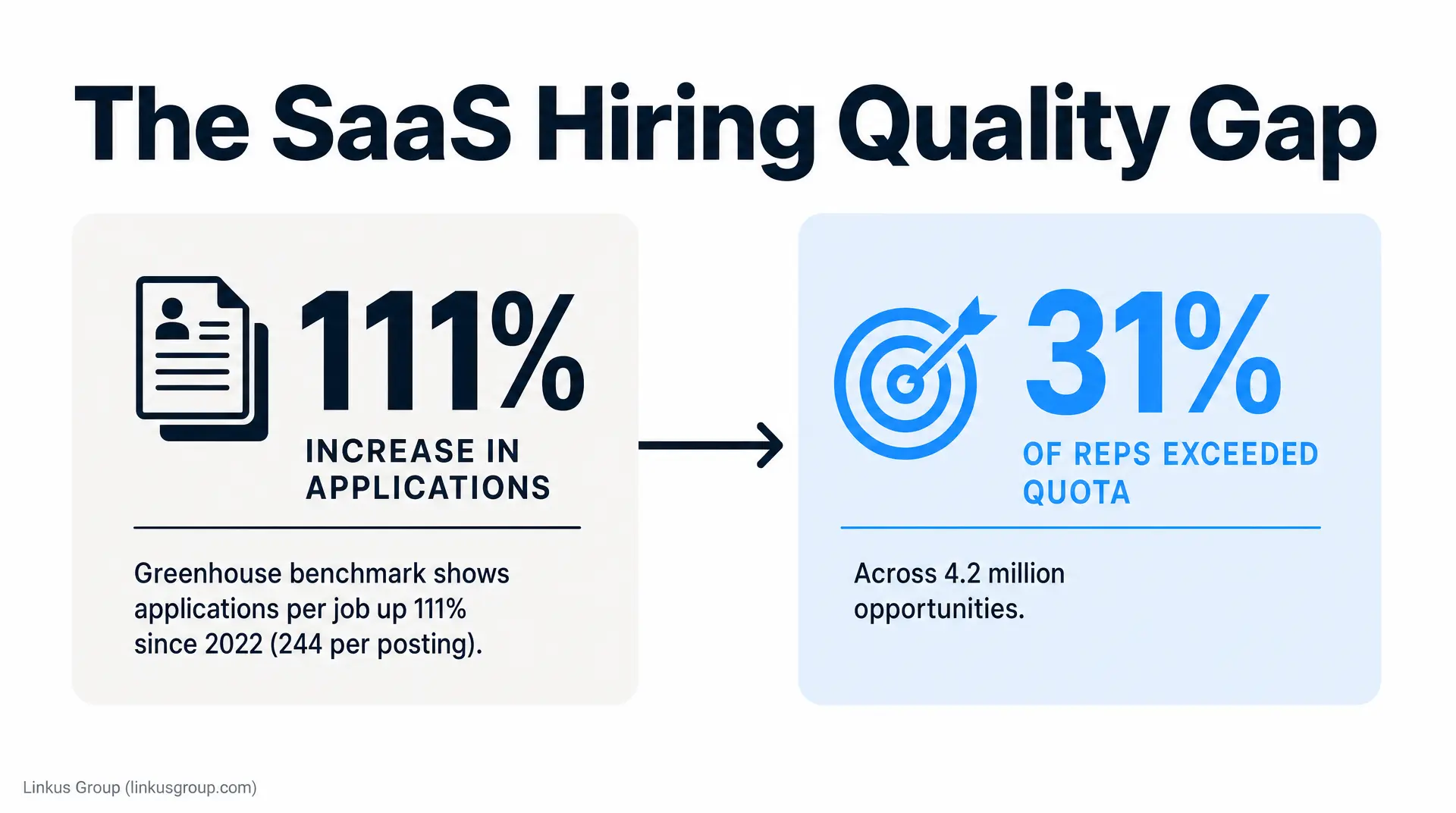
The pile got dramatically worse, too. Greenhouse's benchmark of 6,000+ companies shows applications per job up 111% since 2022, now at 244 per posting, and a huge chunk of them are AI-written and keyword-stuffed. You'll burn a week screening noise while a competitor closes the one person who never applied anywhere.
Post-and-pray also quietly rigs your search. You only ever see active seekers, which builds bias into the process and shrinks your pool before you start. Posting a job and hiring internally is just the bare minimum, the same way 10 phone calls a day is the bare minimum for a salesperson.
How Should Startup Founders Define the Role for Their First SaaS Sales Hire?

Cash-strapped founders come to me wanting one rep who can build the playbook, close enterprise deals, run the CRM, and answer support tickets. The more you add, the more likely you're describing three people. Jobs are really just business problems that companies need to solve. So name the single biggest constraint in your business and hire for exactly that.
For most zero-to-one founders, the constraint is your own time. It's rare that a founder is better off doing anything other than sales, so your first sales hire should multiply your hours in front of customers. Salesforce found reps already spend only 40% of their week actually selling. Load your first hire with four side jobs and you've bought yourself an expensive admin.
Why Is Attitude More Important Than Industry Experience When Hiring a Founding SaaS Salesperson?
One founder I worked with was choosing between two founding salespeople. One could genuinely talk to customers but had zero industry experience. The other had the industry background. I said take the constraint-solver. They went with experience. That candidate turned down the offer, so they hired my recommendation instead – and that person is thriving today. Skills can be taught. Attitude and drive can't.
Why Do Enterprise Sales Reps Fail at Unknown SaaS Startups Due to Logo Fatigue?

Before one company hired us, they made the classic move: a big-Rolodex rep from a direct competitor. Perfect on paper, brilliant in interviews. Then they couldn't sell without that famous brand behind them. No warm leads, no big budgets, no logo opening doors. I call it logo fatigue, and if nobody has heard of your company, you need salespeople that can sell an unknown logo.
It's like sports. Some players are stars on one team and terrible on another. The player was the same. The inputs changed. You just really have to understand the inputs that make people successful – who fed them leads, who else sat in their deals, what the brand did for them before they said a word.
Real outperformers are also rarer than resumes suggest. In an analysis of 4.2 million sales opportunities, only 31% of reps exceeded quota. And even elite ones can bounce off startup ambiguity. I placed a 12-year Microsoft top performer with a biometrics startup once. Everything aligned, and they still went back to Microsoft. Microsoft rehired them, that's how good they were. The startup inputs simply weren't their inputs.
How Can Recruiters Successfully Pitch Off-Market SaaS Sales Talent in 30 Seconds?
So how do you get someone who's already winning to reply? You market the opportunity like it was built for them, because if you did your homework, it was. My actual opener sounds like this: "I've got something great that I think you're going to want to hear about, and this is why. Are you open to giving me 30 seconds of your time?"
Then the next 30 seconds have to hold up. Growth drives sales talent more than anything – Salesforce found lack of advancement is the No. 1 reason reps across three generations want out. Sell the seat: what they'll own, where it leads, and exactly what the money looks like. Vague promises repel the exact people you want.
And know the market before you open your mouth. Median SaaS AE on-target earnings sit around $190,000. If you can't pay that in cash, trade equity honestly. A candidate giving up $100K in salary is handing you hard-earned cash, so that equity should be worth roughly double – around $200K vested. In my experience, that's how a Canadian founder stays in the fight against a US offer paying 50% more.
One more thing. Every inbox is drowning in AI sequences now, so a real human who did real research stands out more than ever. Nobody makes a major career decision with a bot.
Why Is Hiring Speed the Biggest Advantage for Startups Recruiting SaaS Sales Talent?
Hire slow, fire fast is the biggest lie ever told in hiring. You never have to fire if you hire really well. And speed is really your only advantage as a startup, so use it.
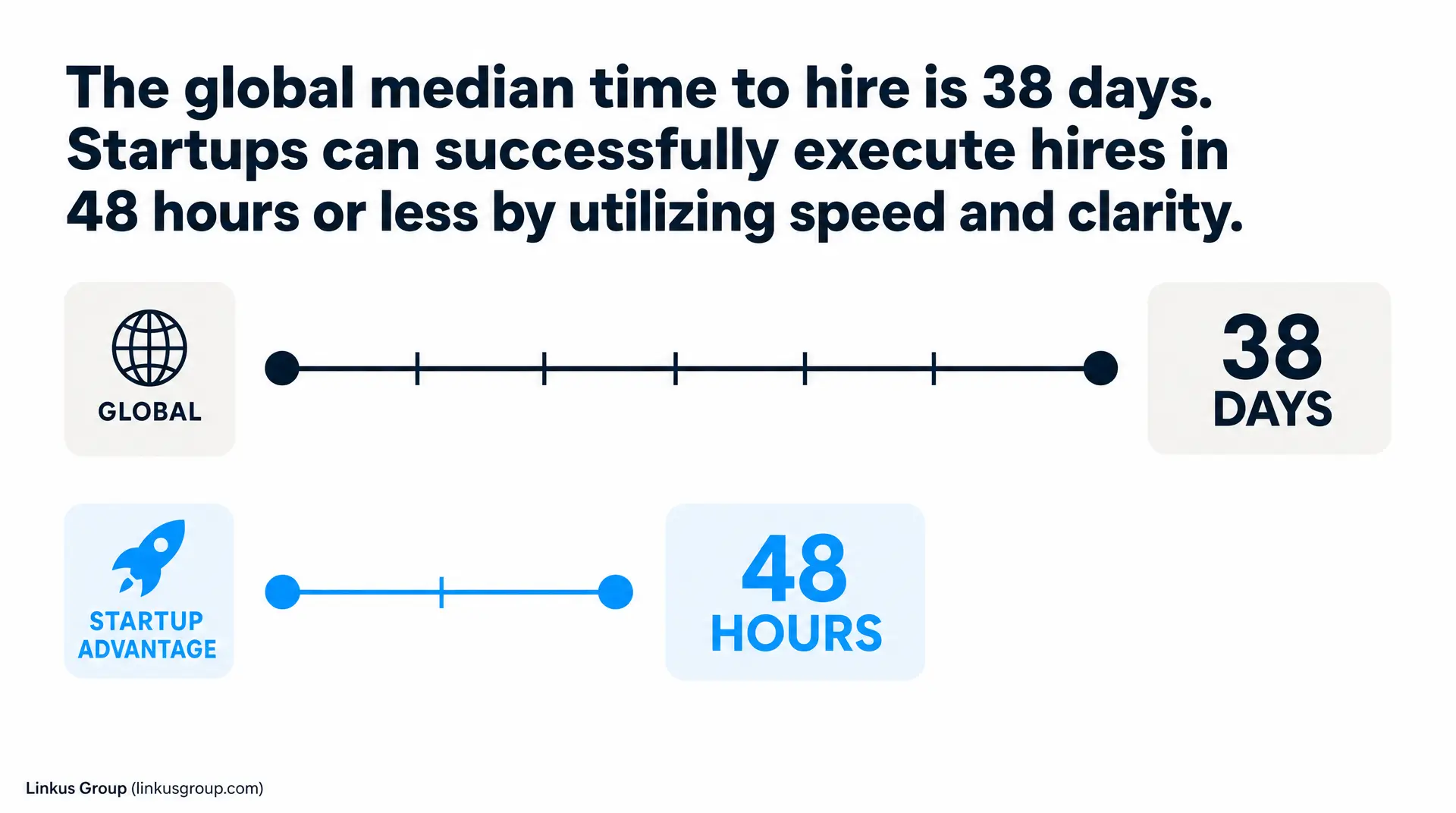
The global median time to hire is 38 days. Companies can actually hire in 48 hours or less, but only when you know exactly what you're looking for, know what good looks like, and have every step planned before the search starts. Speed doesn't kill quality. Not having clarity does.
Be ready to decide the moment you see the right person, because hesitation invites competing offers and time kills all deals. At Linkus Group we send one vetted candidate within 48 hours instead of 30 resumes, and usually companies hire the first person we send them. We live inside our clients' Slack and pick up on weekends, because a candidate weighing two offers doesn't wait for Monday. Our placements hold a 96% retention rate at 18 months, and that number comes from clarity work done up front.
How Should Startups Evaluate Off-Market SaaS Sales Candidates for Trust and Grit?

You will never guarantee a hire. What you can do is reduce your risk: vet for trust, attitude, and grit in real conversations, test whether they can sell your unknown logo, and jump when it aligns – like catching the ball that wins the game.
After two decades of doing this, I keep learning the same lesson. The person who does best in the job is usually the person you'd least expect. They're off-market right now, crushing it for someone else, waiting for a founder to give them a real reason to move. Go be that founder.