

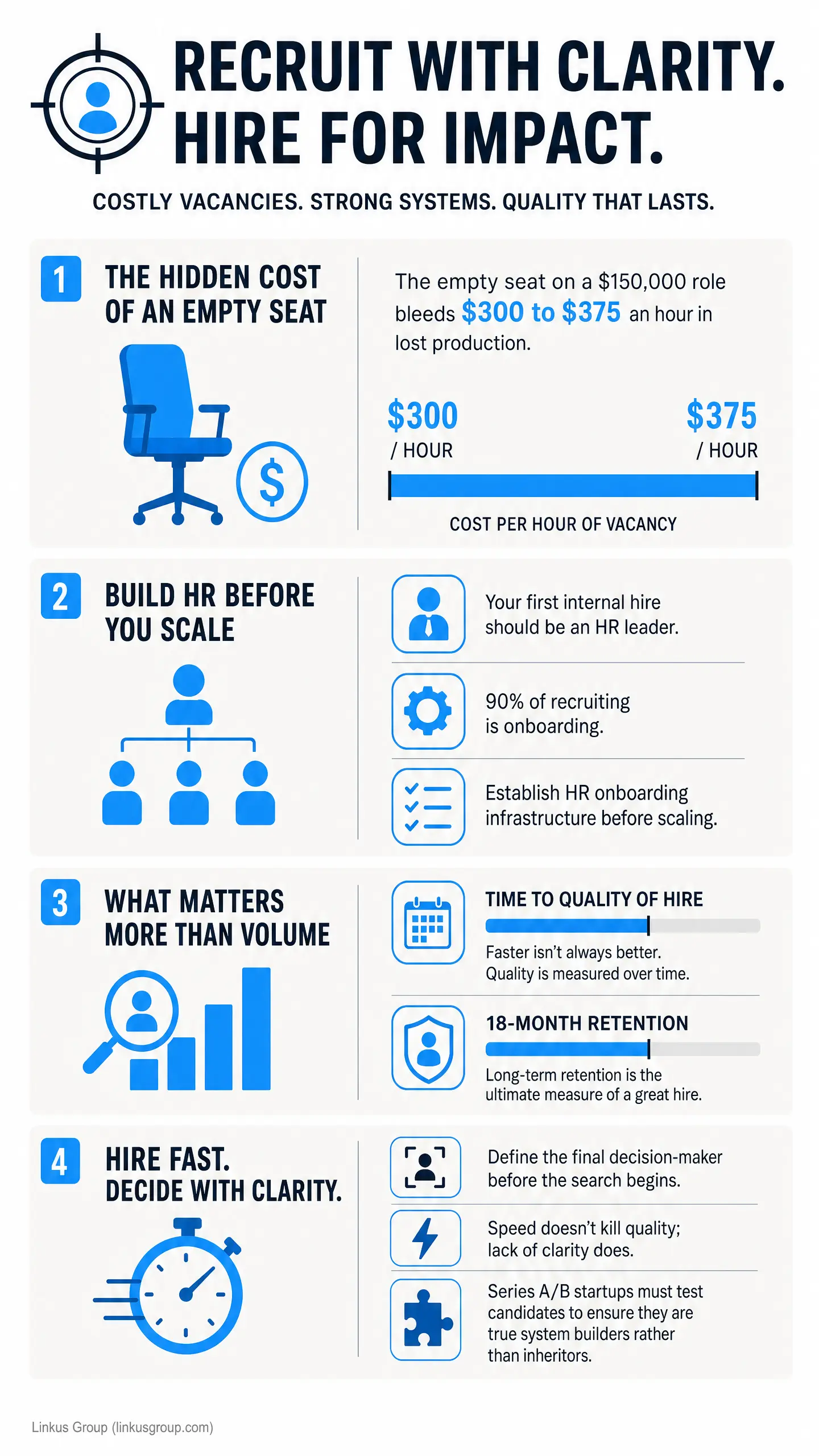
The empty seat is the most expensive thing in your company, and it appears on no ledger you actually read. On a $150,000 role, that vacancy bleeds $300 to $375 an hour in production you will never recover, every hour you spend thinking about it.
'Hire slow, fire fast' gets repeated like wisdom. It is permission to let that meter run under a respectable name, while you add another interview stage, telling the 42% of candidates who wanted fewer that the role isn't a priority.
A hiring team handed a longer deadline fills it with a personality test, a stalling tactic so no one has to own the decision.
Key Takeaways
- An unfilled $150,000 role costs a company $300 to $375 per hour in lost production based on an expected output multiplier of four to five times the base salary.
- Prolonging the hiring process with additional stages signals disorganization to top talent, aligning with a 2024 Greenhouse survey showing 42% of candidates prefer exactly one or two interview stages.
- A startup's first internal talent hire should be a Human Resources leader because structured onboarding dictates recruiting success, an area where Gallup reports only 12% of organizations excel.
- Internal recruitment teams should replace time-to-fill metrics with time-to-quality-of-hire and track 18-month retention rates to combat the 43.4% two-year turnover rate observed in Carta startup data.
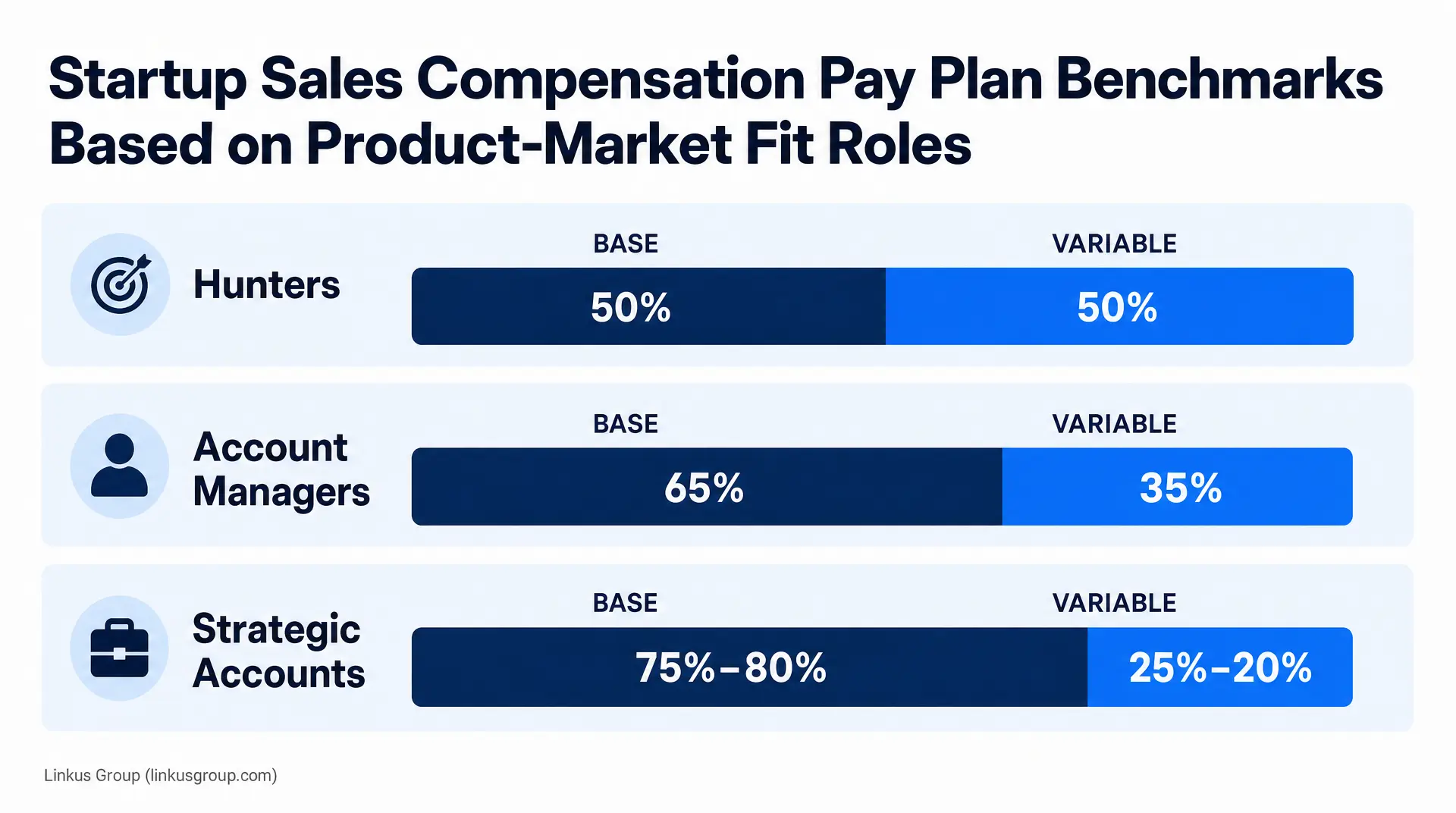
- According to Alexander Group benchmarks, effective sales compensation plans utilize a 50/50 base-to-variable split for hunters, 65/35 for account managers, and 80/20 for strategic accounts.
- High-performing employees generate 400% more productivity than average workers, scaling up to 800% in complex management and software development roles according to McKinsey research.
How Should Founders Structure Recruitment Outcomes Before Creating an Organizational Chart?

When a founder tells me, "We need twenty people this quarter," my answer is whoa, whoa, whoa, let's plan. Maybe you need 20. Maybe you're under-hiring in the one seat that's holding everything back. Before we determine how many people to hire, we set up the structure for the outcomes we want and the type of person who gets us there. I know that's counterintuitive coming from a recruiter, since most recruiters want volume. A big team doesn't mean a great team. You see it when VC-backed companies grow too fast and then lay people off.
Take a founder-led legal tech firm we've worked with. About 30 people, roughly 20 years in business, very profitable, and they chose to move methodically. You don't need three salespeople, you need one really good salesperson. You don't need three product managers, you need one really good one. While they held that line, some of their competitors went bankrupt, and we brought the best of that talent over to them.
I've watched the opposite too. A 55-person health tech company wanted to hire fast and beat everybody to market. I told them I thought we should slow down. After we filled a few roles, they brought in another recruiter who hired like crazy. A food tech company did the same with salespeople under the wrong leader, and every rep they added lost money. Statistically, what we've seen is that paying better people higher salaries and focusing on leadership and work environment wins. McKinsey cites research showing high performers are 400% more productive than average, and up to 800% in complex roles like management and software development.
Fewer, better people also doesn't mean stuffing three jobs into one seat. I had a founder who wanted an operations manager to own the P&L and also carry CPA-level accounting. Once we put the market and their budget in front of them, they narrowed to the hire that actually existed. Jobs are really just business problems that companies need to solve. One problem per seat.
Why Should a Startup's First Internal Talent Hire Be a Human Resources Leader?

Typically people get this wrong and hire a junior recruiter first, someone who posts on job boards and books calendars. Posting a job and trying to do hiring internally is just the bare minimum, like a salesperson making 10 phone calls a day and calling it a pipeline.
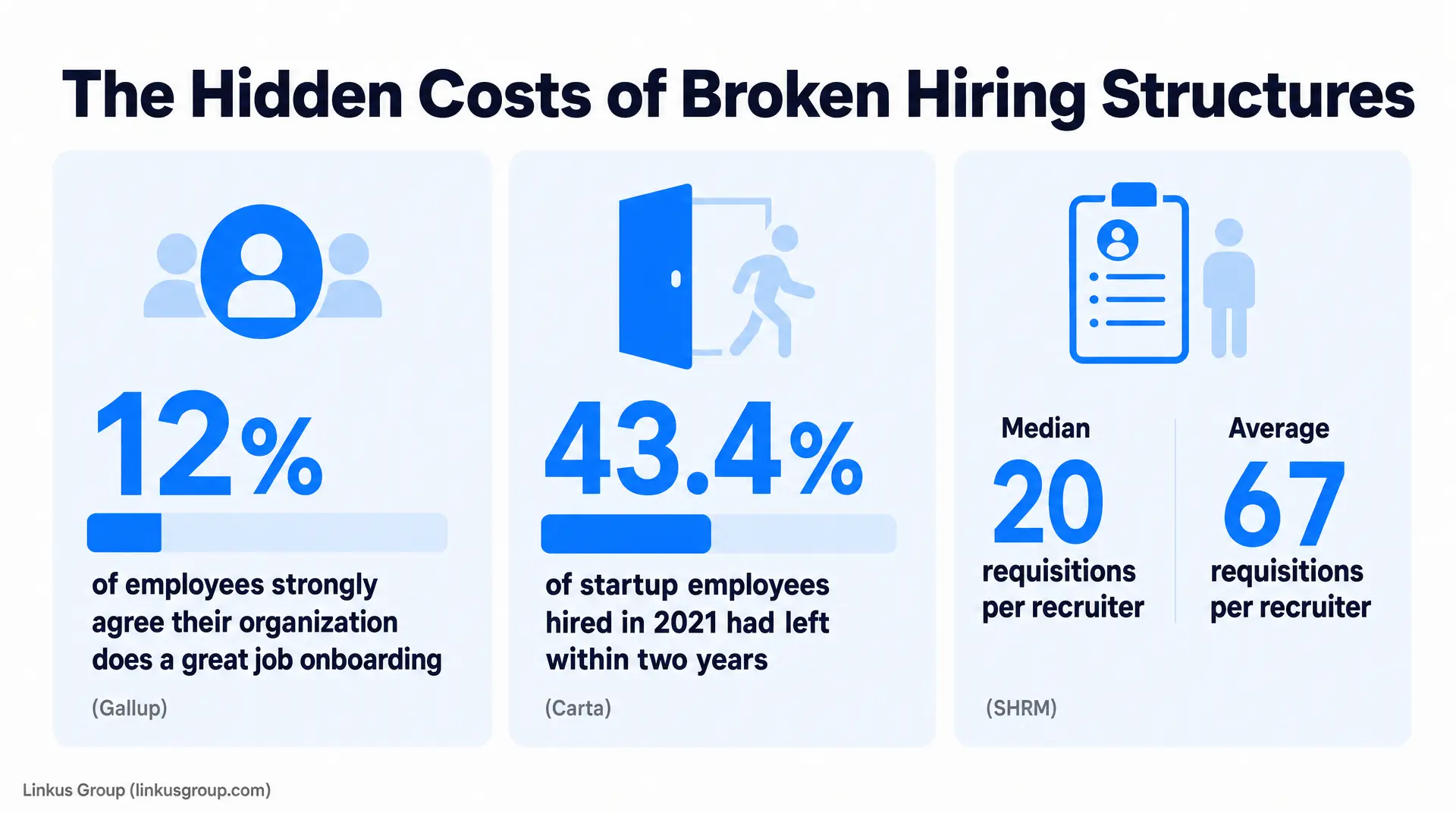
Your first hire should be an HR leader, because 90% of recruiting is the onboarding process. Find the best person on the planet, and if there's nobody inside to onboard them, train them and set them up to hit outcomes, you've wasted the search. Gallup found that only 12% of employees strongly agree their organization does a great job onboarding. At most companies the seat gets filled and the new person is left to figure it out, and that's how a great hire becomes a resignation at month nine.
HR and recruiting also require two different mindsets. The HR person's responsibility is to empower the people within the organization, and the recruiter's responsibility is to empower people outside of the organization. At 50 to 250 employees you need the inside piece built before the outside piece scales. SHRM's benchmarking puts the median at 1.98 HR employees per 100, so one overwhelmed generalist running your whole pipeline at a hundred heads is already under water.
What Are the Limitations of an Internal Recruiter's Skill Set for Executive Talent Acquisition?

An internal generalist or junior recruiter can absolutely source. Vetting and closing a specialized executive who is happily employed and not looking is a distinctly different skill, and honestly it's a sales skill. You have to read intent, know pay bands cold, and know how long a posting should live. That context comes from at-bats, and it has to come from somewhere.
Watch the workload too. SHRM found a median of 20 requisitions per recruiter while the average was 67, and that gap means a lot of recruiters are buried. One person carrying 40 open reqs is triaging, and top candidates feel it in the slow replies.
What Are the Most Effective Performance Metrics for an In-House Recruitment Team?
If your in-house team measures itself on time to fill and application volume, you will hire more, not better. Instead of time to fill, the true metric is time to quality of hire. How fast did you get a person in the seat who actually produced the outcome you hired for? Then track whether they're still there at 18 months. We hold ourselves to 96%. Carta found that 43.4% of startup employees hired in 2021 had left within two years. Anywhere near that number, quality is your problem, and volume will make it worse.
Time does not improve candidate quality. Give a hiring team a longer deadline and they expand the process instead of reducing risk. They add a personality test, which in my opinion is a stalling tactic so nobody has to own the decision. Top candidates notice. In Greenhouse's 2024 survey, 42% of U.S. candidates preferred only one or two interview stages. Moving slowly tells a candidate you're disorganized and the role isn't a priority. Speed doesn't kill quality. Not having clarity does.
Why Must Companies Define the Final Hiring Decision-Maker Before Starting a Talent Search?

Most hiring processes fail at the very end. A stakeholder who doesn't own the outcome of the role steps in at the last minute and vetoes. That's a structural problem, and it belongs to your in-house team to solve. Before a search starts, get crystal clear on who the final decision-maker is and who will own this person's results. It's all about layering expectations.
Then decide the moment you see the right person, because time kills all deals. I worked with a company that won a major bank contract and then lost the project to a competitor. They needed three people, their interview process wasn't aligned to the project timeline, and they couldn't hire fast enough, so a competitor who could took the work.
How Do Human Resource Leaders Calculate the Financial Cost of an Unfilled Job Vacancy?
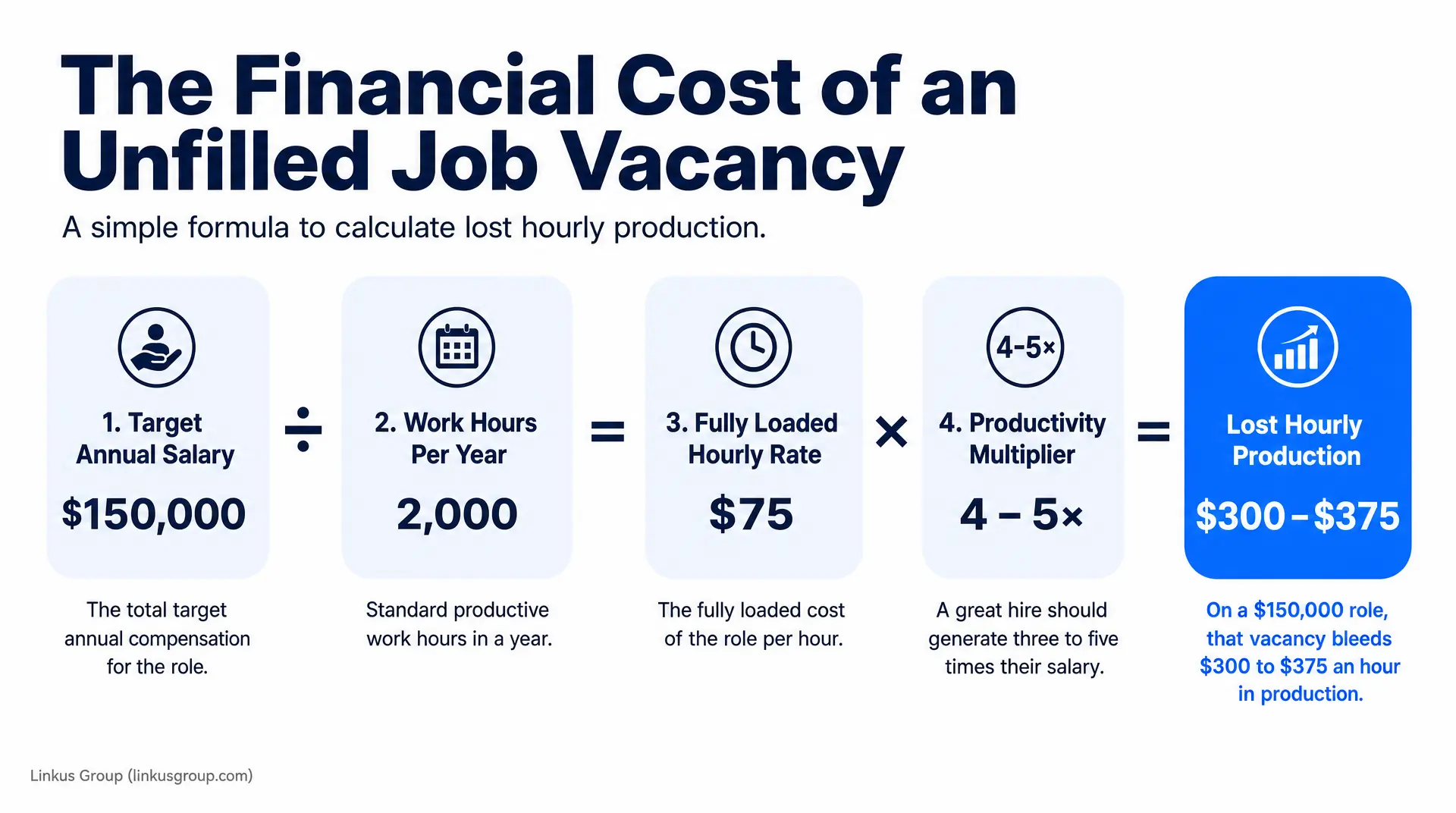
Your HR leader should run this every time a seat opens. Take the target annual salary and divide it by 2,000. That's the hourly rate. Multiply by four or five, because a great hire should generate three to five times their salary, and that's what the empty seat costs you per hour in lost output. On a $150,000 role, that's $75 an hour, or roughly $300 to $375 an hour of production you're not getting while you're "thinking about it."
There's also the stress on you and on the team covering the gap, which in my experience is what pushes good people out the door. I had a health tech client tell me, "Maybe I don't need to hire this person." Three months later it was, "Oh shoot, we should have started this earlier." Start the process as soon as there's pain and you can afford it. Yes, that's a little chicken and egg with capital, but you lose more money spending more time than hiring the wrong person. The math cuts both ways. It stops you hiring three average players because the board said so, and it stops you sitting on a seat for six months waiting for a unicorn.
How Should Series A and B Startups Verify Candidates Who Claim to Build Systems?

At Series A and B you need people who can legitimately build systems, and every candidate will say they have. If the system is public-facing, have them show it. If it's proprietary, have them walk you through every stage of what they built, why, how, and who was involved. Then ask who can verify it, and call those people. Work backwards from training: how would you train someone on this? Then flip it into a scenario. If you built this here, how would you go about it, and what would you need from me? A builder asks sharp questions about your constraints. An inheritor recites what the last company did.
How Should Startups Transition Seed-Stage Generalists Who Cannot Build Scalable Systems?
Your early generalists thrived in chaos, but now you're feeling the pain of redoing certain things and the business not moving forward. That's your signal to look for a specialist. Typically you transition the early person into another role, hire a leader on top of them, or have a candid conversation and part ways. If the person hitting the ceiling is a technical co-founder, that transition should have been agreed at the very beginning with a lawyer and an HR team. When it wasn't, call an employment lawyer before you call a recruiter.
Same test for sales. A rep from a big brand may have hit quota with pre-warmed leads and a logo that opened doors. Ask how they were involved in the sale and who else was, then talk to those people and run a mock call before you decide. You need salespeople that can sell an unknown logo.
How Should Startups Structure Sales Compensation Pay Plans Based on Product-Market Fit?
Commissions are a meter stick for motivation, so keep them aggressive and uncapped. For revenue roles I typically see 50/50 base to variable, with the base rising when the person spends part of their day managing a team instead of closing. Alexander Group's benchmarks land in the same place, roughly 50/50 for hunters, 65/35 for account managers and 75/25 or 80/20 for strategic accounts. The plan also has to match your sales cycle and where you actually are on product-market fit. Otherwise you end up like the food tech company, where the wrong leader plus the wrong volume meant every hire bled margin.
Why Is Prioritizing Quality Over Volume the Most Effective Corporate Talent Acquisition Strategy?

The strongest hiring outcomes I've seen come when internal cultural knowledge is combined with external market intelligence. A good partner knows the market, headhunts from your competitors, and gives you a second set of eyes when a hiring manager's criteria are off. That's why we refuse to work with our clients' direct competitors, and why we bring back what candidates are saying about you as an employer.
Hiring is the biggest unlock in a company's business. Hire slow, fire fast is the biggest lie ever told in hiring. You never have to fire if you hire really well, and it always comes down to TAG: trust, attitude and grit. Get that right in one person before you go looking for three.
Frequently Asked Questions
How many open requisitions should one internal recruiter actively manage?
Never let a recruiter juggle more than 20. According to SHRM, while the average workload is 67 requisitions, the median is 20. Overloading your internal team guarantees slow replies, signaling to top candidates your startup is disorganized. Quality executive vetting requires strict bandwidth limits.
Should our in-house recruitment team lead VP and C-level executive searches?
Usually, no. Internal teams lack the network for highly specialized leaders. SHRM data shows only 28% of companies use in-house executive recruiters, while 50% use external search firms. Vetting a VP who isn't actively looking requires a specialized sales skill and deep market intelligence.
How do we structure hiring to push back on VC-mandated headcount milestones?
Anchor your pushback in productivity variance and retention data. McKinsey notes high performers are up to 800% more productive in complex roles. Meanwhile, Carta reports nearly 44% of 2021 startup hires left within two years. Hiring fewer, better people preserves cash flow. Volume destroys margins.
How can an in-house team eliminate 'gut-feel' biases when evaluating grit?
Mandate structured interviews tied to outcomes. The Psychological Bulletin proves structured selection has a .51 validity rate, crushing unstructured interviews at .38. Pairing mental agility testing with backward-engineered behavioral scenarios exposes true builders and filters out charismatic inheritors relying on a past employer's brand.
What is the optimal HR-to-employee ratio for a scaling Series A startup?
Don't run lean on infrastructure. SHRM cites a median of 1.98 HR employees per 100 staff. Furthermore, ADP Research found employees with highly formal onboarding view HR positively 5.3x more often. A single generalist cannot support hyper-growth. Under-resourcing this function directly spikes expensive turnover.