

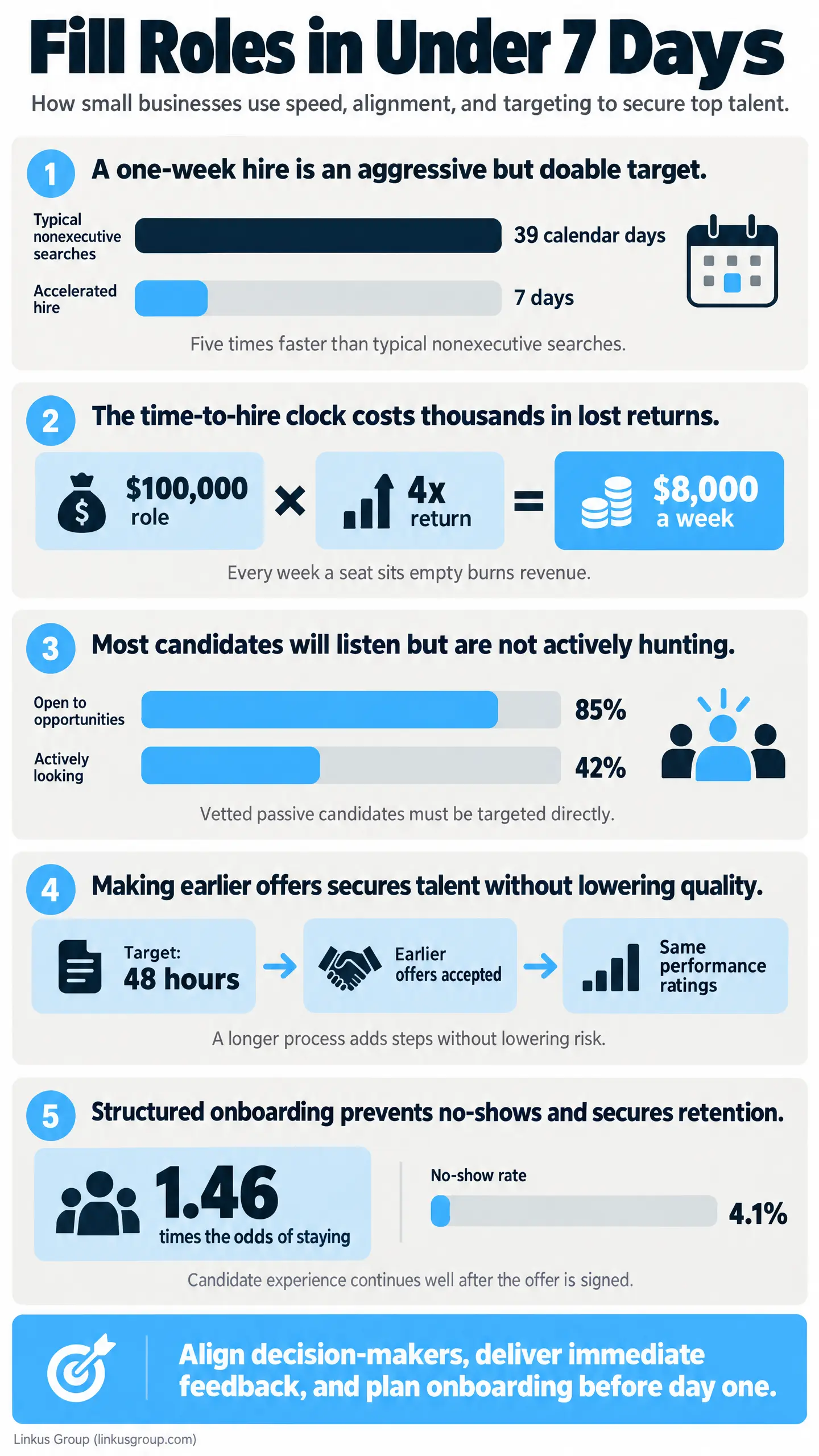
A one-week hire is an aggressive target for a small business, and a very doable one when the owner sets the search up for speed. SHRM's 2026 recruiting benchmark, covering more than 4,600 organizations, puts the median time-to-fill at 39 calendar days for nonexecutive roles, so a week is more than five times faster than typical. Most companies call me needing someone as of yesterday. They can even hire in 48 hours or less if they plan every step ahead of time, know exactly what good looks like and give candidates a great experience. At under 250 people, speed is your biggest advantage, so the number to watch is how fast you get to a quality hire. Hiring tips for small businesses matter most when speed starts to put quality at risk. What hurts quality in a fast hire is a lack of clarity about what the person is there to do.
Key Takeaways
- SHRM's 2026 recruiting benchmark of 4,600 organizations identifies the median time-to-fill for nonexecutive roles as 39 calendar days, making a one-week hiring target five times faster than average.
- The financial cost of a vacant $100,000 role is approximately $8,000 per week, calculated by assuming a standard 2,000-hour work year and a four-times expected salary return.
- Employ's 2025 job seeker report indicates that 85% of surveyed U.S. workers are open to new opportunities, whereas only 42% are actively hunting for a role.
- A field study of 3,012 candidates demonstrated that applicants are more likely to accept earlier job offers without experiencing lower performance ratings or higher turnover rates.
- Telecom industry records spanning 157,154 accepted offers revealed a 4.1% candidate no-show rate that directly increases as the gap between the offer and start date lengthens.
- A meta-analysis of 83 field experiments found that new hires who complete structured onboarding programs possess 1.46 times higher odds of staying with the employer.
- Linkus Group maintains a 96% placement retention rate at 18 months by coaching clients through the onboarding process and thoroughly defining the core business problem upfront.
How Do Real-Time Feedback and Decision-Maker Alignment Accelerate Small Business Hiring Processes?

On the fastest really good hires I've made, the owner and everyone else involved in the hiring decision got on the call together. They agreed to jump on feedback, so nothing we sent sat waiting. They also agreed to tell us immediately if the needs of the role or the business changed, the way you'd tell a partner. At Linkus Group, we work inside our clients' Slack or Teams channels, so we hear about those changes as they happen.
One of those hires was a financial leader. The client needed someone in the office and bilingual. We found exactly who they wanted on a tight timeline, because they moved fast and gave us feedback in real time. Run that same search for a company that lowballs the candidate, moves slowly, gives people a poor experience and keeps us out of the loop, and we won't land their best option.
When a hiring manager changes their mind mid-search, it's a disaster. All the work up to that point is wasted, and it comes down to poor planning. Things do change, though, and as long as we know immediately, we can work with any pivot. On that first call, also settle who makes the final decision and who owns the outcome of the hire. Searches often fall apart at the very end because nobody agreed on that up front, and someone who doesn't own the role ends up vetoing the right candidate.
How Is the Time-to-Hire Metric Tracked and the Financial Cost of Vacancies Calculated?
The time-to-hire clock starts the moment a problem shows up in the business. That might be customers churning, cash going out faster than it comes in, shipping delays or an NPS score sliding. So by the time an owner calls me, it has already been running.
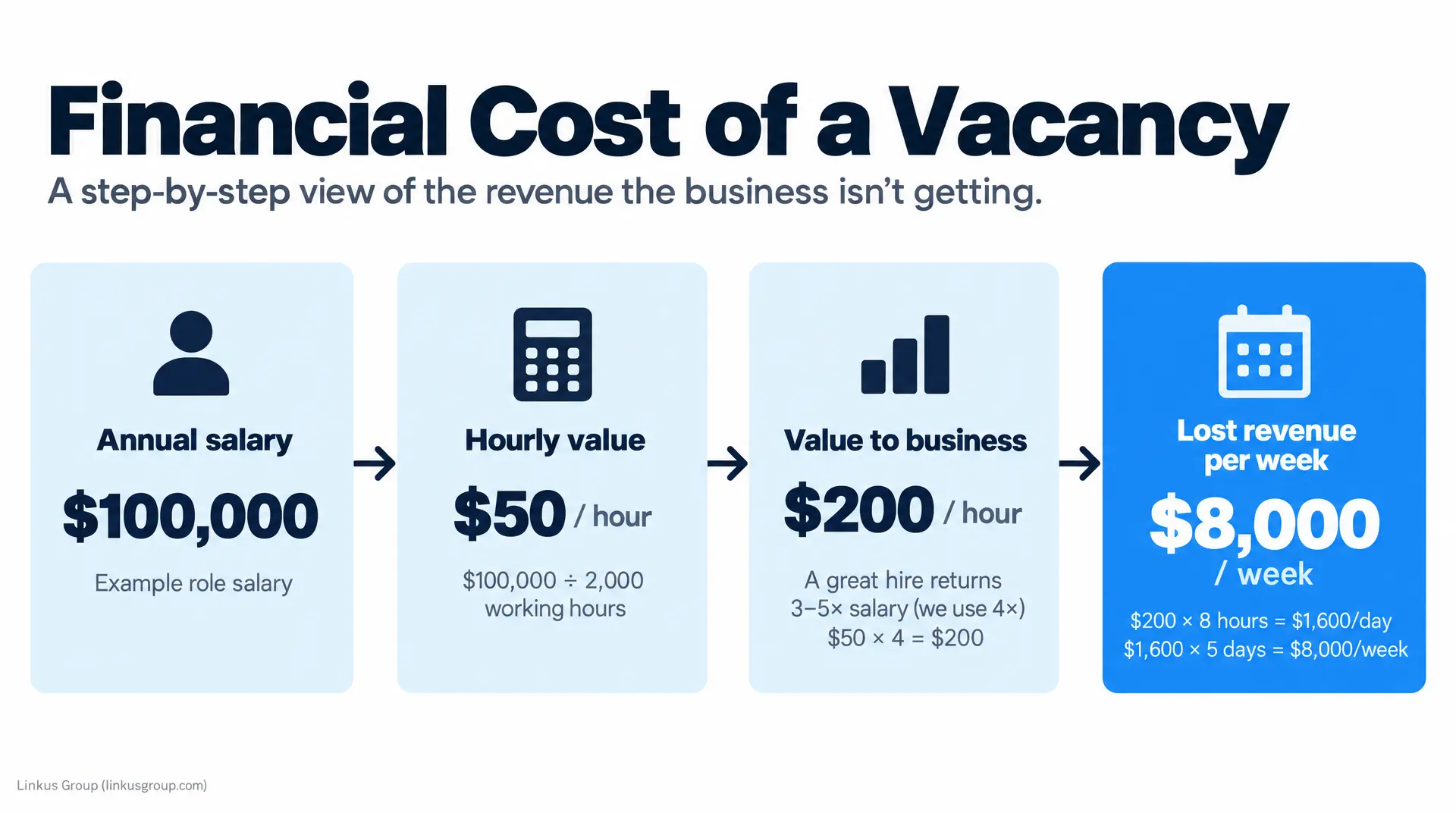
I put a rough number on the empty seat by dividing the salary by 2,000 working hours, so a $100,000 role comes to $50 an hour. A great hire should return three to five times their salary, so I multiply by four. That gives $200 an hour, about $1,600 a day and around $8,000 a week the business isn't getting. It's an estimate that only holds if the role really returns that multiple, so if you can count what the seat produces, use your own number. It also leaves out the people covering the gap, who get worn down and are often the next ones to leave.
Valuing a hire at four times salary, an open small business role costs roughly $4,800 to $20,000 a week, and a 7-day hire saves $21,900 or more over a typical search.
|
Role by annual salary |
Estimated lost value per week open (hire returning 4x salary) |
Lost value over a 39-day search (SHRM 2026 median, nonexecutive roles) |
Saved by hiring in 7 days instead |
|---|---|---|---|
|
$60,000-a-year role |
$4,800 |
$26,700 |
$21,900 |
|
$80,000-a-year role |
$6,400 |
$35,700 |
$29,300 |
|
$100,000-a-year role |
$8,000 |
$44,600 |
$36,600 |
|
$150,000-a-year role |
$12,000 |
$66,900 |
$54,900 |
|
Executive role, $250,000 a year |
$20,000 |
$128,600 (45-day executive median, 2025) |
$108,600 |
We worked with an Amazon e-commerce brand where a missing manager meant risking inventory mistakes and hundreds of thousands of dollars in lost revenue every week. Another company won a major bank contract and still lost the project to a competitor. Its interview process didn't match the project's timeline, and it couldn't hire the three people it needed fast enough.
How Can Small Businesses Adjust Compensation, Location, and Requirements to Fill Vacant Roles?
Before I look at a job description, I ask about the business. Why did you start the company? What's changed since last year? Where are you trying to get to? What's the biggest constraint you're facing right now? Job descriptions suck at attracting people, and if they worked, I'd be out of a job. A job is a business problem the company needs solved, and once we know which problem, the fluff comes out.
Great people are usually pretty pointy at one thing, so a company that rolls three roles into one can spend forever looking for someone who doesn't exist. I worked with a founder who wanted an operations manager who could also run the P&L and do CPA-level accounting. I showed them what talent was actually available at their budget and in their location. They dropped the three-in-one and narrowed the search to the option that fit.
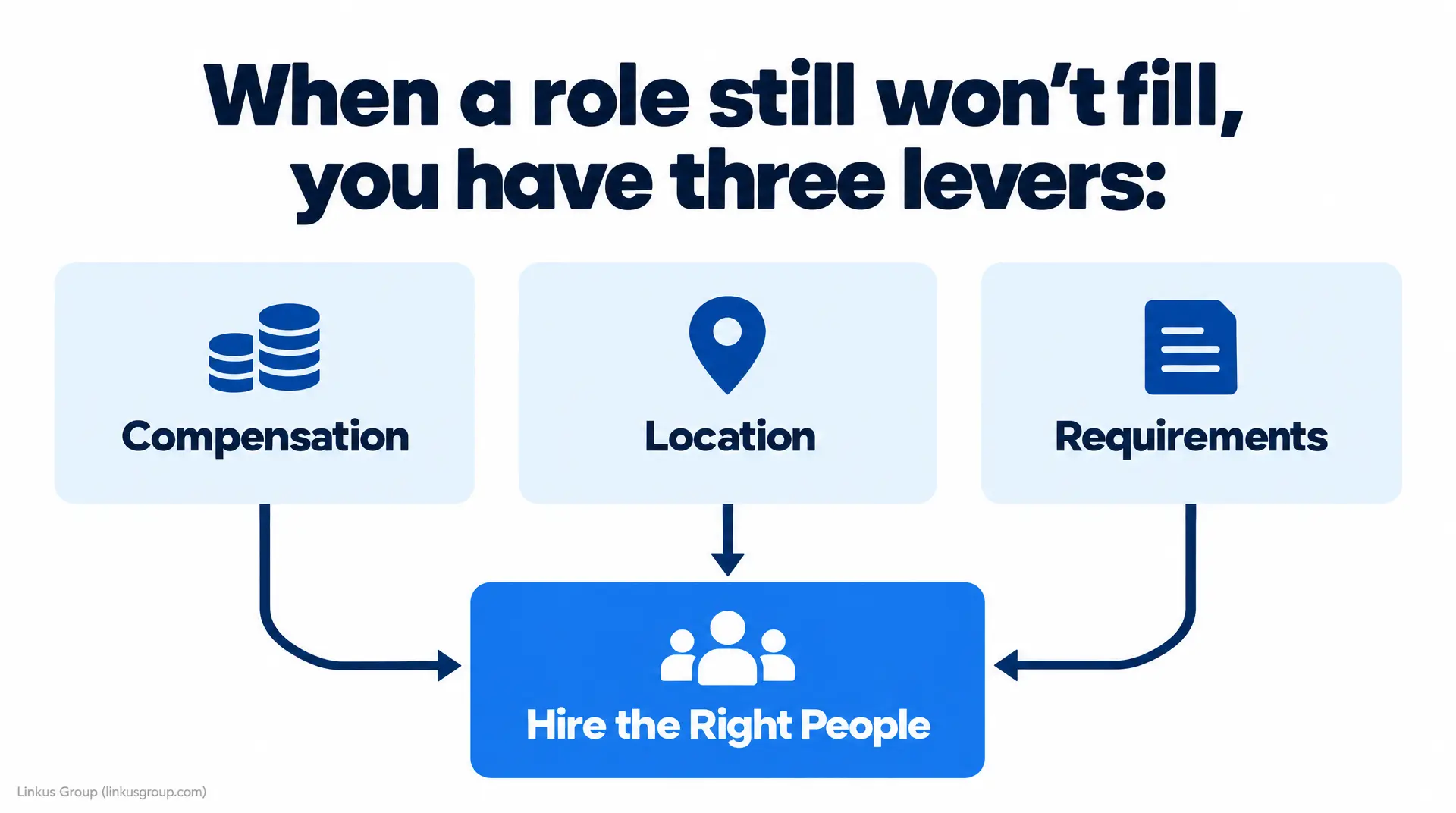
When a role still won't fill, you have three levers: compensation, location and requirements. It's like buying a house: if you're paying less, maybe you don't get the fireplace or the pool, right? We had a client with really bad Glassdoor reviews and burned bridges across their industry. They needed very specific experience and wanted to underpay. We told them that unless they'd move one of those levers, we probably weren't the best fit, and they could come back if anything changed.
How Does Sourcing Single Vetted Passive Candidates Accelerate Small Business Hiring Timelines?
Once the problem is clear, we aim to put a vetted candidate in front of a client within 48 hours, and usually companies hire the first person we send. Some roles take longer, depending on the role and the market, but by then you should at least have someone you want to interview. That speed comes from a deep dive up front and from not adding layers. A lot of agency work is set up so the agency gets paid for process, and the extra steps just make it look like more is happening. You shouldn't need 30 resumes or 30 interviews to decide. A company asking for a pile is often solving a different problem, like keeping its own staff busy.
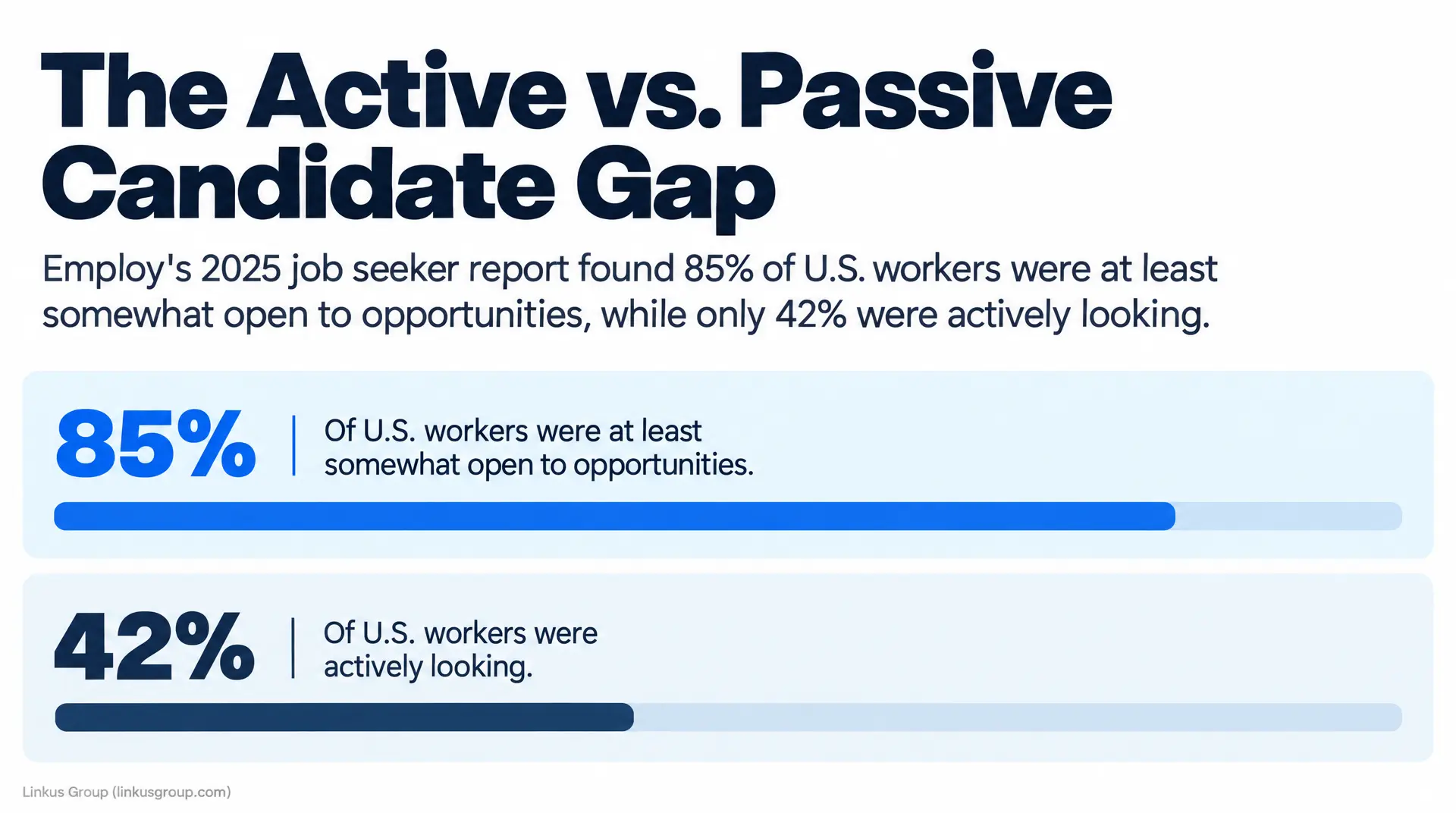
I can't stand hearing that a candidate came out of our back pocket, because people aren't sitting around waiting for your job. Employ's 2025 job seeker report found 85% of the U.S. workers and job seekers it surveyed were at least somewhat open to other opportunities, while only 42% were actively looking. The people in that gap would hear out the right role but aren't hunting for one, so a posting probably won't reach them. You have to go get them and present the role the right way at the right time.
Sending one person is deliberate. If you're Don Draper pitching an account you want to win, you walk in with one great idea, even if it might be wrong, because 10 ideas just confuse the client. If the discovery was good, the first candidate should be close. If they're not, the feedback gets you a second shot at someone similar. We work on contingency, so a candidate who isn't right doesn't get hired and we don't get paid.
How Do Practical Work Assessments Ensure Candidate Alignment During Small Business Job Interviews?

The job of an interview is getting the candidate aligned. So spend less time interrogating and more time walking them through the actual day-to-day: the good, the bad and the ugly. Then dig into what they want. Why are you looking to leave? What made you take your last job? If you could create your next job, what would it look like? Those answers have to line up with what you're offering.
Much of what you need to know comes from seeing the person in the role, so put a slice of real work in front of them. For polish, ask for the email they'd send a vendor to order a thousand pairs of jeans. For a salesperson, run a mock call or bring them into a client meeting before you decide. For someone who says they built a system, have them walk you through every step, why they built it that way and who on their team can verify it.
Skip the personality tests. In my view they're mostly a way for a hiring team to avoid blame if the hire goes wrong, and the extra rigor makes the company look disorganized to the candidates it wants most. One company with a highly prepared Head of Sales candidate stalled because the team said it was too busy, and moving that slowly signaled the role wasn't a priority.
Why Should Small Business Hiring Managers Make Immediate Job Offers to Qualified Candidates?

If a lead worth a million dollars came in, you wouldn't let it sit for 48 hours, even if you weren't sure it was any good, right? Yet companies let great candidates sit that long every day. In a field study of 3,012 candidates at one large company, people were more likely to accept earlier offers. Those who took the earlier offers got the same performance ratings and left no more often than people who took later ones. That's one employer, but it fits my view: a longer process adds steps without lowering the risk, and it gives the candidate time to take someone else's offer. So have the decision-makers ready and make the call the moment the right person shows up.
"Hire slow, fire fast" is the biggest lie ever told in hiring, because if you hire well, you shouldn't have to fire anyone. The idea that diversity hiring has to be slow is a fallacy too, since moving slowly on purpose can push those candidates away. If you want more women in your sales roles, set up flexible hours and remote work before the search starts.
When the person you want asks for $5,000 more than you planned, go back to the empty-seat math. By my rough numbers, $5,000 is less than a week of a $100,000 role sitting open, and starting the search over takes a lot longer than a week.
Reference checks still happen in a one-week hire, after the decision. Great people are usually employed and their references are busy, so asking early is tough. In the interview, ask who on their team could verify the work they describe. Then make sure those people are reachable, because you want to know how this person performed and whether they showed up.
How Does Structured Employee Onboarding Improve Small Business Retention and Prevent Offer No-Shows?

My rule of thumb is that at least 90% of a hire's success comes from how you onboard and treat them, starting the day they accept, because the candidate experience doesn't stop when the offer is signed. At one large telecom company, records covering 157,154 accepted offers showed 4.1% ended in a no-show, and the risk was higher when the gap between offer and start date ran longer.
The 90% is my own estimate, but the research points the same way. A meta-analysis pooling 83 field experiments put new hires who went through onboarding programs at 1.46 times the odds of staying. The programs helped more when they spelled out what good work looks like, pushed people to take initiative and helped them build relationships on the team. Plan all three before day one, because smart people still need guidance in a new place.
When a hire falls apart, owning that is the leader's job, and blaming the candidate is usually an excuse. If a quick hire does fail, the misalignment usually shows up right away and it's fundamental. The person isn't taking the actions you expected, isn't doing what they said they'd do, or isn't showing up. Predicting how someone will do in a new environment is virtually impossible, so the goal is reducing your risk. Our placements hold 96% retention at 18 months. That comes from the time we spend with clients understanding the role and coaching them through onboarding, so there are no surprises on either side.
If I had a seat open today, I'd get everyone with a say on one call this week and agree on who makes the final decision. I'd write down the business problem the hire has to solve and decide which of the three levers I'm willing to move. I'd keep my calendar clear to turn feedback around right away and make the offer as soon as the right person showed up. Then I'd check references and have their first weeks planned before they started. And if you'd like a second set of eyes on the role, I'm happy to jump on a quick call and talk it through.
Frequently Asked Questions
How do startups win executive candidates against massive corporate offers?
You can't outspend the tech giants, so don't try. Win on speed and access. A corporate hiring process drags on for weeks. If you put a candidate in front of the CEO and make an offer in 48 hours, you win. Top talent wants direct impact, not bureaucracy.
Should small businesses prioritize equity or cash for executive compensation?
It has to be a realistic mix. Cash pays the mortgage. Equity is the upside. If you underpay on cash, your new hire will constantly stress about bills. Get the base salary close to market rate, then use equity to align their success with the company's next funding round.
Why do 'big-logo' corporate executives often struggle to scale early-stage startups?
Investors love big corporate names, but those leaders are used to massive budgets and deep support teams. In a startup, you have to build the system yourself. If an executive expects an army to execute their ideas, they'll freeze when they actually have to get their hands dirty.
What should a founder do when a top candidate negotiates their salary offer?
Expect it. In a recent survey, 37% of candidates negotiated, usually landing a 5% to 10% bump. Go back to your empty-seat math. If $10,000 closes the deal, pay the premium. Starting a new search costs you way more.
How heavily does a lack of remote work flexibility impact offer acceptance?
It's a massive dealbreaker. Among candidates declining offers, 32% walked away due to limited remote flexibility. If you force strict in-office mandates without a real business reason, you instantly shrink your talent pool. If the job can be done remotely, offer the flexibility.