

Candidate experience decides whether top talent leans in or walks away.
A lot of founders treat it like a side issue. They bet on the offer, the brand, or the mission. Those things help. The process still matters just as much.
I eat, sleep, and breathe recruitment, and one thing is obvious to me. Candidate experience shapes whether good people trust you enough to move.
The data is very clear. Nearly 60% of job seekers say they have had a poor candidate experience. And 72% shared that negative experience online or with other people. So when your process feels messy, slow, or disrespectful, the damage keeps going after the role is closed.
I founded Linkus Group to take the pain out of recruiting so founders can focus on running the business and building customer relationships. Through Linkus Group, my team and I have made more than 1,000 hires for 500+ founder-led startups and SMBs. We have also built a network of 110,000+ exclusive, verified, high-potential candidates.
Long before Linkus Group, I recruited engineering and technology talent in automotive manufacturing, IT, and energy. The industries changed. The hiring problems did not. Most people don’t know how to hire and most people don’t know how to get hired.
Alignment is key. When what the candidate wants and what the company wants line up, the whole process gets easier. When that alignment is missing, candidate experience suffers fast.
My goal has always been simple. Help companies get the best person possible in the job for the lowest cost, the highest speed. A clunky process kills that goal. Alignment, honesty, and clear decisions move you toward it.

Candidate experience shows top talent how your company really works
Here’s the thing. Most startups look pretty similar on the surface now.
You offer remote work? Other companies do too. You offer benefits? Same thing. You have a mission people care about? A lot of other companies do as well. Founders do not always like hearing that, but it is true.
So what do candidates use to tell companies apart?
They watch how you hire.
If your process is sharp, they assume your business has focus. If your process is slow, they assume decisions are slow. If your interviews feel scattered, they assume the company is scattered. Candidate experience becomes a preview of the job.
That matters more than a lot of leaders realize. Nearly 50% of candidates would decline a job offer after a poor hiring process. And in one PwC study,negative experiences spread twice as fast as positive ones.
For startups and SMBs, this is a real business issue. Your market is smaller than you think. People talk. Networks overlap. A bad process today can hurt the role you need to fill next quarter.
I say this all the time because I believe it deeply. Hiring is the most underrated way to excel a business. Candidate experience sits right in the middle of that. It affects speed. It affects close rates. It affects retention. It affects what the market says about you when you are not in the room.
Get clear before you ever open the role

Start with the business problem
A lot of founders call when they needed to hire somebody as of yesterday. That is normal. I hear it all the time.
The first mistake is jumping straight into a search before getting clear on what problem needs to be solved.
Hiring is just business problems that need to be solved.
So start there. What is the real issue? What outcome do you need? What position do you need this person to play? What happens to the business if that seat stays empty? If the founder wants one thing, the hiring manager wants another, and the rest of the team is guessing, candidates feel that confusion right away.
When you ask better questions, the role usually gets clearer fast. Sometimes the answer is a full-time hire. Sometimes it is a fractional person. Sometimes it is somebody on an hourly basis to help the business get through a deadline. Once you understand the business problem, the conversation with candidates becomes much more real.
That alone improves candidate experience. People can tell when you know what you need. They can also tell when you are winging it.
Stop writing fantasy job descriptions
This is another big one. Companies overcomplicate hiring because they try to hire someone they cannot afford, someone who does not exist, or someone who is somehow supposed to do three jobs at once.
Candidates feel that immediately.
The strongest people usually pull back. They know when a role is unrealistic. Other candidates stay in the process but never fully understand what the job is. Then everybody wastes time.
I’ve seen this across executive hires, tech hires, sales, marketing, finance, and operations. I saw it earlier in my career recruiting engineering and technology roles, and I still see it now with startup hiring every day. The pattern is always the same. The company adds too much. The process gets messy. Communication starts to break down.
Be specific. Tell people what the role owns. Tell them where the pressure is. Tell them what support is there. Tell them what success looks like in the first 90 days. And stop obsessing over endless nice-to-haves. Hiring can be much more of a straight line than you make it.
Move fast, but move with structure

Cut the extra rounds
Hire slow, fire fast is one of the biggest lies ever told.
You don’t need to fire at all if you hire really well. And if you move so slowly that every good candidate gets picked up by someone else, you are creating your own hiring problem.
I use sports analogies a lot because they fit. Hiring is like signing a free agent. The team that knows what it needs and moves first has a real edge. The team that hesitates usually loses. Time kills deals, and hiring is no different.
A lot of founders add rounds because they are scared. They are risk-averse. They think more interviews will make the decision safer. Usually it just makes the process slower and weaker. If three people are asking the same questions in three different meetings, you are not getting better signal. You are burning candidate trust.
About 60% of candidates drop out because of poor communication or long delays. And 34% of candidates waited one to two months or longer just to hear next steps in one global survey. Top talent will not sit around for that.
In some cases, you can hire a top engineer in a day if you know exactly what you need and can move. Preparation makes that possible. Panic hiring makes a mess. You should never sacrifice quality for speed or speed for quality.
Communicate every step
Communication is where candidate experience usually falls apart.
Candidates want clarity more than perfection. They want to know what the process is, who they are meeting, what each step is for, how long it should take, and whether they are still in the running.
That sounds basic. It still gets missed constantly.
About 80% of job seekers said they would be discouraged from considering more roles at a company if the company failed to notify them of their application status. So close the loop. Send the update. Even a short note is better than silence.
At smaller companies, this is actually an advantage. You can move faster than bigger companies. You can be more human. You can make decisions without 10 layers of approval. Use that.
And if you do not have strong recruiting muscle internally, get a recruitment partner who understands the market and cares about your business. You need somebody who knows where to look, how to attract the right candidates, how to repel the wrong ones early, and what competitors are doing. You also need honesty there. A good partner should tell you what you need to hear, not just what sounds nice.
Tell the truth early

Share the good, bad, and ugly
I believe in radical transparency. Without honesty and transparency, there is no trust. And without trust, you do not have much of a relationship long term.
So tell candidates the good, bad, and ugly.
Founders do not always love that advice. Employers don’t like to know the hard things about hard things. A lot of them think their company is the best thing since sliced bread, and that everybody should want in. I understand the excitement. I respect the conviction. But candidates are comparing you to a lot of options.
What stands out is truth.
Tell candidates where the role will be hard. Tell them what is still messy. Tell them what the company has figured out and what it has not. Tell them where they will need grit. The right people often lean in because they trust that you are being real with them. Good hiring attracts the right candidates and repels the wrong ones sooner.
That trust matters. Nearly 41% of candidates said they would be unlikely to accept a job if the hiring process left them with a negative impression. A vague, polished, over-sold process creates exactly that.
Drop the buzzwords
A lot of hiring language is lazy. “Fast-paced environment.” “Family-run company.” “Must wear many hats.” Serious candidates get almost nothing from those phrases.
Be specific instead.
If the role needs somebody who can work without a lot of structure, say that. If priorities change quickly, say that. If you need someone to build while also figuring things out, say that. People can handle reality. What they hate is surprise.
The strongest placements I have seen always come back to alignment. The role was explained properly. The candidate knew what they were walking into. The company knew what it needed. Nobody felt sold. Everybody felt clear.
No surprises. Everybody hates surprises.
Make the process feel personal

Top talent is not sitting there waiting
I have never liked the old model where companies throw a job on a board and hope the right person appears. I think that approach is broken for a lot of hiring. The best employees often come through referrals and networks, even though that alone is not enough.
That is one reason I built Hipo. I wanted startups to have better access to off-market talent through a network and smart matching. A lot of top candidates do not apply online. They are busy. They are doing well. They move when the opportunity makes sense and the process feels right.
People are not sitting around waiting for your job. You have to understand their motives, their aspirations, their career trajectory, and what the market looks like around them.
That means candidate experience starts before the first interview. It starts in the first message. Why this role? Why now? Why them? If your outreach feels generic, the best people will ignore it.
Respect time and keep it human
Personalization is basic respect.
Read the candidate’s background. Make sure the interviewers are prepared. Keep meetings relevant. Do not make someone tell the same story five different times. Do not disappear for a week and come back asking if they are still interested.
Poor communication is one of the biggest red flags candidates see. In one survey, 57% of candidates said it was the biggest thing that gave them a negative impression of an employer. And roughly 70% of candidates who had a negative experience said they would discourage others from applying.
At Linkus Group, we have always taken a high-touch, personalized approach. We stay selective with the companies we work with because quality matters more than volume. A lot of our growth has come from repeat business and referrals. I care about the long game. I want the companies I work with to grow, exit, and keep building. That only happens when hires stick.
Interview for TAG and future trajectory

Look for trust, attitude, and grit
I use TAG as the acronym: trust, attitude, grit.
Those three things tell you a lot about whether someone is going to be a strong long-term hire. Skills matter. Experience matters. Of course they do. But if you ignore TAG and focus only on logos, titles, or a perfect resume, you miss the bigger picture.
Trust matters because people need to do what they say they are going to do. Attitude matters because energy changes teams. Grit matters because startup environments are hard. Things change. Pressure shows up. You need candidates who can stay steady and keep moving.
So interview for that. Ask questions tied to the real work. Ask how they think. Ask how they have handled change. Ask what kind of environment helps them do their best work. Keep it relevant. Keep it grounded.
Focus on where they can go
A lot of companies spend too much time trying to prove what a candidate has already done. I would rather spend more time understanding what they could do next.
Potential matters. Future trajectory matters.
Some of the best hires I have seen did not look perfect on paper if you were only checking boxes. I have seen someone get hired as an executive assistant and grow into a head of people role. I have seen candidates move from a $70,000 salary to a $500,000 salary and an exit with the company. I have also seen founders start another business and hire that same person back as a co-founder.
Those outcomes come from real alignment. The role fit. The timing fit. The company told the truth. The candidate stepped into something that matched where they were going.
And one more thing. Great hires do not always look amazing in week one. Sometimes the strongest people take a little longer to hit the ground running, then become the top performer. Measure over time. Look at impact. Look at growth. One of the cleanest questions is whether both sides would make the same decision again.
Close with conviction, then onboard properly

Do the math before you hesitate
A lot of candidate experience falls apart right at the end.
The company finds the right person. Everybody likes them. Then the founder freezes because the salary is a bit higher than expected, or because they want to see a few more people.
When that happens, I go straight to opportunity cost. If the gap is small, what will it cost you to reopen the search? What will it cost you to leave the role unfilled? What will it cost you if you hire someone for less money and they do not create the outcome you need?
Great hires should generate three to five times their salary. That is the math founders should be looking at. Closing should feel aligned and decisive. When the fit is there, act on it.
Top candidates feel hesitation. They notice when a company is unsure. If you want the person, show conviction.
The process keeps going after the offer
Candidate experience keeps going after the offer letter gets signed.
In my view, 90% of recruiting is the onboarding process.
A strong onboarding process can improve new-hire retention by about 82%. That should get every founder’s attention. We spend 90,000 hours of our time at work. The first few weeks matter a lot.
The onboarding experience should confirm everything you sold in the process. Same role. Same priorities. Same expectations. No surprises. The manager should be ready. The team should be ready. The goals should be clear. If the role feels different on day 10 than it did on day zero, trust drops fast.
At Linkus Group, we have seen a 95% retention rate in our placements, and many of those people stay five or 10 years. I cannot control product-market fit or company finances. But when the fit is real, you see it in longevity, career growth, and impact. Onboarding is a big part of that.
Final thoughts
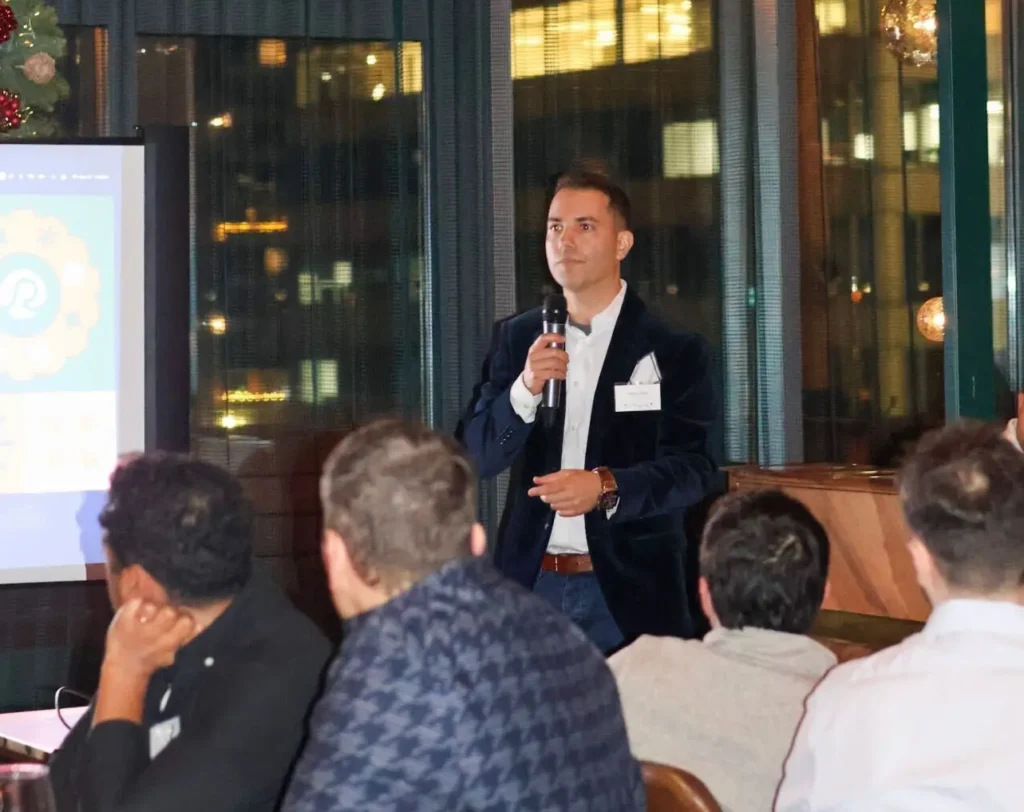
If I had five minutes on a DisruptHR Vaughan stage to talk to founders about this, I would keep it very simple.
Stop overcomplicating hiring.
Candidate experience improves when you get clear on the business problem, move fast, communicate every step, tell the truth, personalize the process, look for TAG, and onboard properly. That is it. Hiring can actually be easy when you stop adding noise to it.
Founders and SMBs can win top talent with clarity, honesty, speed, and a process that respects the person on the other side of the table. That is where trust starts. That is where alignment starts. And that is how great hires happen.
Top talent is not waiting around. Build a hiring experience that is clear, fast, honest, and worth saying yes to.
Frequently Asked Questions
How should startups reject applicants without damaging their employer brand?
Don’t ghost them. Silence is a brand killer. A PwC study shows 70% of candidates with bad experiences discourage others from applying. Send a clear rejection immediately. For late-stage interviews, call them. Honesty builds market respect.
How can SMBs compete with enterprise companies on candidate experience?
You win on speed and access. Enterprise hiring is notoriously slow and bureaucratic. Startups can make decisions in days, not months. Give top talent direct access to the founder during the process. When you move fast and offer radical transparency, you easily outmaneuver corporate competitors.
How do you measure if your candidate experience is actually working?
Look at your offer acceptance rates, but mostly, track pipeline drop-offs. A HiBob survey found 41% of people reject offers after a bad hiring impression. If top-tier candidates are abandoning your pipeline, your process is broken.
Should early-stage founders automate hiring communication to save time?
Automate logistics, never the relationship. Use tools for scheduling and status updates so nobody waits. However, a recent survey shows 57% cite poor communication as their biggest red flag. Your outreach, feedback, and final decisions must remain fiercely human and personalized.
When is the right time to discuss compensation during the hiring process?
Talk about money in the very first conversation. Hiding salary ranges wastes everyone’s time and destroys trust instantly. Alignment is everything. If you cannot afford their baseline, tell them immediately. Top talent respects founders who are direct about financial constraints rather than dragging them through a fantasy.